
Antarctic Krill and Krill Oil: Biology, Nutrients, Fish Oil






Krill Oil
Why OCEANO3
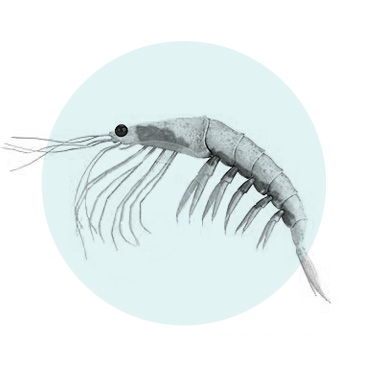
Krill are small, shrimp-like crustaceans with large dark eyes and a reddish, semi-transparent shell. They live in oceans around the world and gather in vast swarms where they graze on microscopic algae called phytoplankton.
A keystone creature
Together, krill make up one of the largest animal biomasses on Earth. Whales, seals, penguins, squid and many fish rely on them as food. About 85 species have been described. The oil used in supplements comes from one of them, Antarctic krill, which lives in the Southern Ocean.
Why the oil gets attention
Oil extracted from krill combines three nutrients that are rarely found together:
- Omega-3 fatty acids (EPA and DHA), the long-chain fats that have been researched in thousands of studies worldwide.
- Phospholipids, which form cell membranes and are involved in the structure of red blood cells, brain cells and joint tissue. In krill oil they carry the omega-3s.
- Astaxanthin, a bright red antioxidant. Producers sometimes describe it as up to 300 times more potent than vitamins A and E in laboratory comparisons; this is a lab figure and does not predict health results.
Because krill sit at the bottom of the food chain, they are thought to accumulate fewer contaminants than long-lived predatory fish, though testing of each batch remains the real safeguard.
Krill oil versus fish oil
| Fish oil | Krill oil | |
|---|---|---|
| Omega-3 form | Mostly triglycerides | Largely bound to phospholipids |
| Astaxanthin | Not naturally present | Present |
| Reported digestion | Some people notice reflux or fish burps | Often described as easier on the stomach |
| Capsule size | Often larger | Often smaller |
Whether krill oil really delivers more omega-3 per milligram than fish oil is still being debated, so shoppers may want to compare products by their stated EPA and DHA per serving.